# Tanzania’s Economic Pulse: What the Latest Numbers Mean for Business
Tanzania’s latest economic indicators present a picture of continued growth, manageable inflation and a monetary environment that remains focused on maintaining stability.
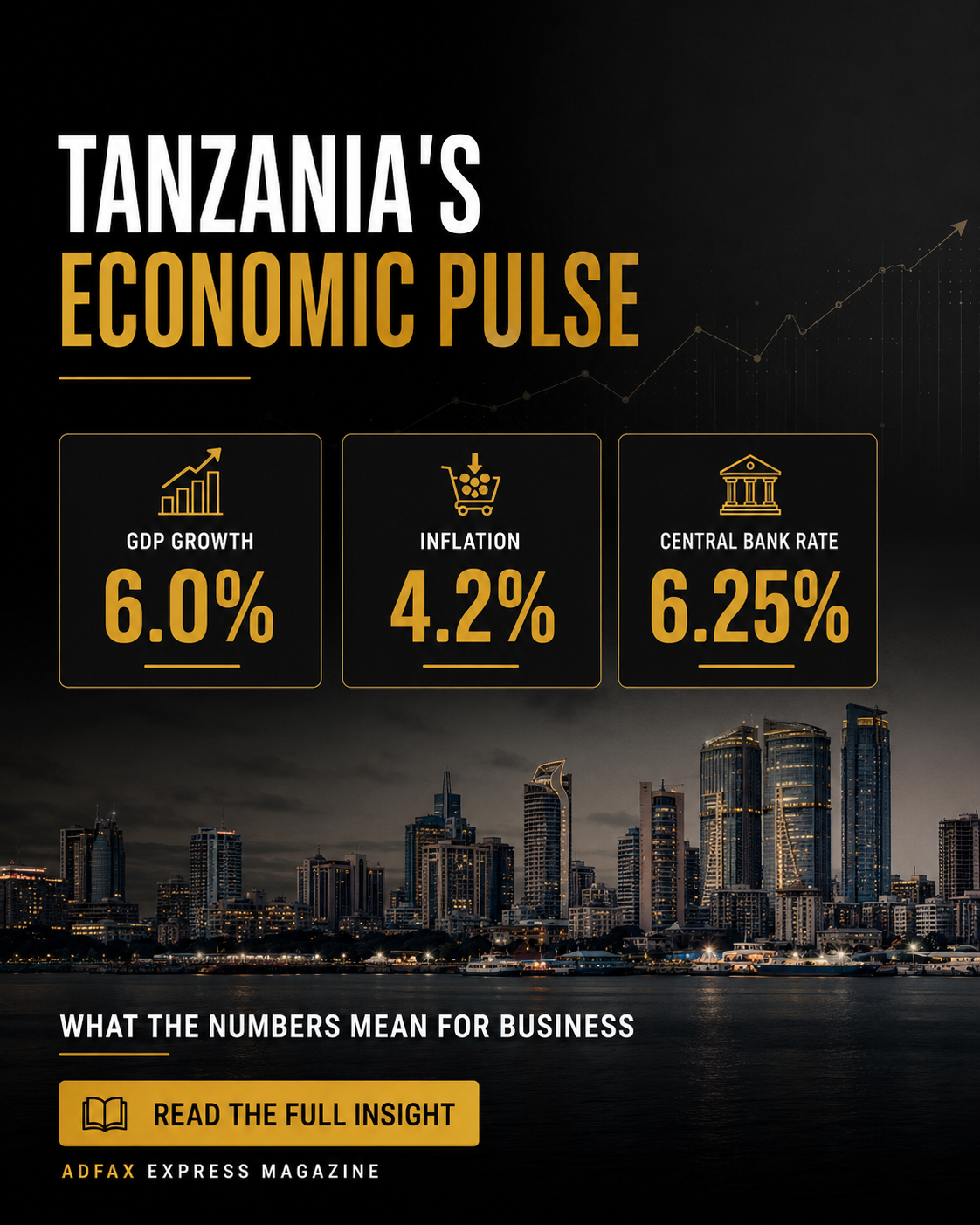
According to economic indicators published by the Bank of Tanzania, the economy recorded gross domestic product growth of 6.0% during the first quarter of 2026. Inflation stood at 4.2% in July 2026, while the Central Bank Rate for the third quarter of 2026 remained at 6.25%.
Taken together, these figures provide useful signals for businesses, investors, policymakers and consumers. They show an economy that is expanding, while also highlighting the need for businesses to monitor prices, financing costs and changes in consumer demand.
## Economic growth holds at 6.0%
The 6.0% GDP growth recorded during the first quarter of 2026 indicates continued expansion in Tanzania’s economic activity.
Economic growth at this level can create opportunities across multiple sectors. As production, trade and investment increase, businesses may experience stronger demand for goods, services, transport, technology, financial services and professional support.
For established companies, the current environment may provide opportunities to increase production, enter new markets or develop new products. For small and medium-sized enterprises, growth can create new supply-chain opportunities and increase demand for locally produced goods and services.
However, economic growth does not automatically benefit every business equally. Companies must identify the sectors, regions and consumer groups in which demand is increasing.
Reliable market information, careful financial planning and a clear understanding of customer behaviour remain essential.
## Inflation reaches 4.2%
Inflation was recorded at 4.2% in July 2026.
Inflation measures the general increase in the prices of goods and services over time. When inflation rises, households may spend more on food, transport, energy, housing and other essential needs. Businesses may also face higher costs for raw materials, logistics, utilities and employee support.
The July rate remains below Tanzania’s traditional medium-term inflation target of 5%. Nevertheless, businesses should continue monitoring movements in operating costs and consumer purchasing power.
A company may continue recording strong sales while earning lower profits if its expenses are increasing more quickly than its revenue. Businesses therefore need to review their prices, suppliers, stock levels and operating budgets regularly.
Consumers may also become more selective when prices rise. Companies that clearly communicate value, maintain product quality and manage costs responsibly may be better positioned to retain their customers.
## Central Bank Rate remains at 6.25%
The Central Bank Rate for the third quarter of 2026 stands at 6.25%.
The rate is an important monetary policy signal. It helps guide financial conditions in the economy and can influence commercial lending rates, access to credit, investment decisions and overall economic activity.
For businesses planning to borrow money, the headline policy rate is only one part of the financing picture. Commercial loan costs may also depend on the borrower’s financial history, collateral, business performance, sector and the lending institution’s assessment of risk.
Companies considering new loans should examine the full cost of financing. This includes interest, fees, repayment periods and the expected return from the investment being financed.
Borrowing can support expansion, but it should be connected to a realistic business plan and measurable income opportunities.
## What the indicators mean for investors
A combination of economic growth and manageable inflation can strengthen investor confidence. It suggests that demand is expanding while the general price environment remains relatively stable.
Investors may find opportunities in sectors supporting Tanzania’s development priorities, including agriculture, mining, energy, tourism, transport, health, construction, manufacturing and the digital economy.
The opportunities are not limited to large projects. Growing industries also need suppliers, technology providers, professional services, logistics companies, communication partners and skilled workers.
Investors should, however, look beyond national-level figures. A strong investment decision requires sector-specific research, regulatory understanding, market analysis and a clear assessment of implementation risks.
The national economy may be growing while conditions within individual industries differ significantly.
## What businesses should do now
The latest economic indicators should be converted into practical business decisions.
First, companies should review their operating costs. Changes in transport, energy, imported inputs and other expenses can affect profitability even when revenue remains stable.
Second, businesses should study customer behaviour. Economic growth can create new demand, but inflation may change how consumers prioritise their spending.
Third, companies should evaluate financing carefully. Credit should support productive activities with a clear path to revenue rather than simply covering recurring operational weaknesses.
Fourth, organisations should identify opportunities created by growth in major sectors. A business does not need to operate directly in mining, agriculture or tourism to benefit from their expansion. It may provide technology, transport, communication, equipment, training or other supporting services.
Finally, decision-makers should use verified economic information instead of relying only on assumptions. Timely data can help businesses manage risks and identify opportunities before competitors do.
## The wider outlook
Tanzania’s current indicators show an economy maintaining positive momentum. GDP growth of 6.0% signals continued expansion, while inflation of 4.2% points to a price environment that remains manageable.
The 6.25% Central Bank Rate also demonstrates the continued role of monetary policy in balancing economic growth and price stability.
For businesses and investors, the key question is not simply whether the economy is growing. The more important question is how that growth affects individual industries, operating costs, financing conditions and customer demand.
Companies that monitor these changes, protect their financial position and respond strategically will be better prepared to participate in Tanzania’s next phase of economic growth.
*Source: Bank of Tanzania economic indicators and Monthly Economic Review.